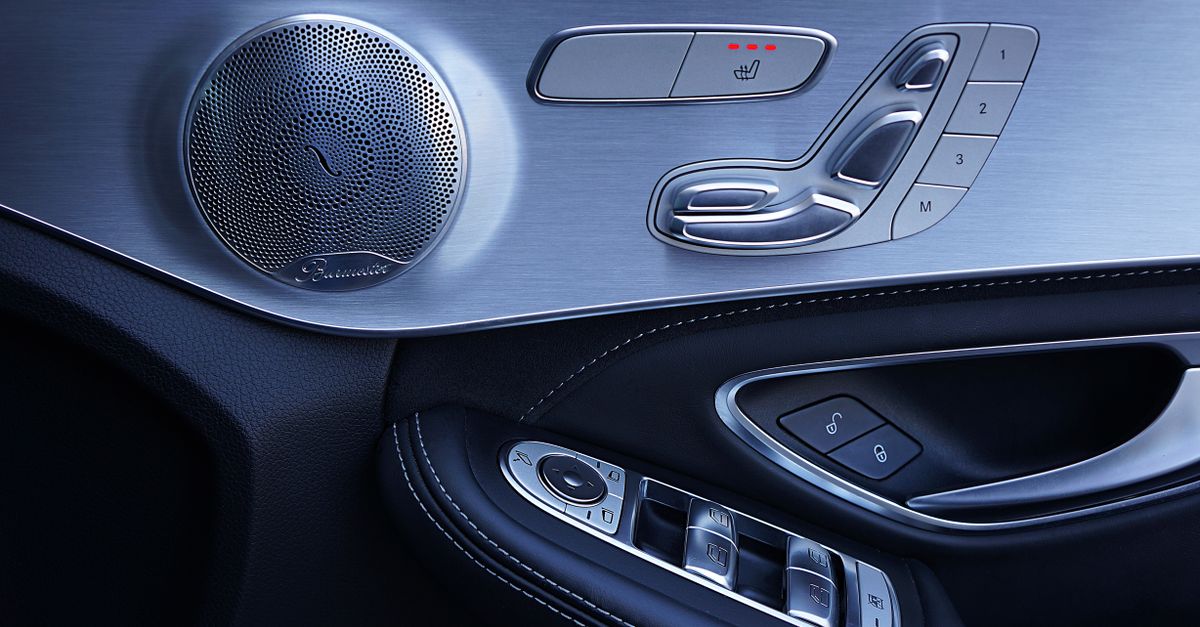
Why Your Car Speakers Fail Most People (And What Actually Works for Real Audio Bliss)
You’ve just upgraded your car speakers, or perhaps you shelled out a bit extra for the premium sound package from the factory. You turn on your favorite track, expecting a concert hall on wheels, and… it sounds, well, fine. Maybe a little better, but certainly not the immersive, heart-thumping audio bliss you envisioned. The bass is still flabby, the vocals are lost in the mix, and at higher volumes, everything just gets harsh and distorted. Why does this happen? Why do so many car speaker upgrades and ‘premium’ sound systems ultimately disappoint?
In my experience, the biggest mistake people make is focusing solely on the speakers themselves. They chase wattages and brand names, thinking a better speaker alone will magically transform their audio. The truth is, car audio is an intricate ecosystem, and ignoring its weakest links means even the most expensive speakers will underperform. The problem isn’t usually the speaker’s potential, but its environment and the power (or lack thereof) driving it. This isn’t about becoming an audio engineer; it’s about understanding a few critical, often overlooked principles that make a dramatic difference.
Key Takeaways
- Upgrading only speakers without addressing power and acoustic environment yields minimal improvements.
- Factory head units lack the clean power and processing necessary for high-fidelity audio, even with new speakers.
- Investing in proper sound deadening is as crucial as new speakers for eliminating rattles and improving bass response.
- A dedicated amplifier provides clean, consistent power, preventing distortion and unlocking speaker potential.
- A digital sound processor (DSP) is essential for correcting the car’s inherent acoustic challenges and tailoring sound.
- Consider component speaker sets and professional installation for superior sound staging and optimal performance.
The Fatal Flaw: Your Head Unit’s Dirty Little Secret
Most people assume the problem with factory sound is the speakers. While factory speakers are often made from inexpensive materials and have limited frequency response, they’re rarely the primary bottleneck for truly terrible sound. The real culprit, the silent saboteur, is almost always your car’s head unit – the stereo receiver in your dashboard. Specifically, it’s the built-in amplifier within that head unit.
Here’s the deal: factory head units, and even many aftermarket ones, deliver very little clean power to your speakers. We’re talking maybe 10-15 watts RMS (Root Mean Square, a continuous power rating) per channel, and often that power is far from clean. As you turn up the volume, these underpowered internal amps start to clip. Clipping is when the amplifier tries to output more power than it’s capable of, flattening the waveform and introducing harsh, audible distortion. It’s like trying to run a marathon on a single glass of water – you’ll eventually stumble and cramp.
This clipping is why your new, supposedly powerful aftermarket speakers still sound bad at higher volumes. They’re being fed a distorted signal, so they faithfully reproduce that distortion. You might have a Ferrari engine, but if you’re putting cheap, watered-down fuel in the tank, it won’t perform. What changed everything for me was understanding that the head unit determines the quality of the signal, not just the features. If your source signal is weak and distorted, no speaker on earth can magically fix it. You need a clean, robust signal from the get-go.
The Unseen Enemy: Car Acoustics and the Importance of Sound Deadening
Imagine buying a top-tier home theater system and setting it up in a reverberant, empty concrete garage. It wouldn’t sound great, would it? Your car’s interior is an even worse acoustic environment. It’s a small, irregular space full of hard surfaces, glass, and vibrations. These factors create reflections, standing waves, and resonances that utterly destroy sound quality. People often spend hundreds on speakers and zero on acoustics, and then wonder why their bass sounds like a tin can rattling.
In my early days of car audio, I upgraded speakers multiple times, always hearing the same persistent rattles and lack of mid-bass punch. The mistake I see most often is installing powerful new speakers into flimsy door panels. Those speakers are designed to move air and create sound pressure, but if the panel they’re mounted to flexes and vibrates instead of staying rigid, you lose energy. This translates to weak, muddy bass and unwanted buzzes.
The game-changer for me was investing in sound deadening materials. This isn’t just about making your car quieter (though it does that too); it’s about transforming the acoustic environment for your speakers. Applying sound deadening mats (like butyl rubber with aluminum backing) to inner and outer door skins, trunk lids, and even floorboards achieves several critical things:
- Reduces panel resonance: It stops those flimsy metal and plastic panels from vibrating along with your music, making them act like proper speaker enclosures.
- Improves bass response: By making the door more rigid and sealing up gaps, you create a better ‘enclosure’ for your mid-bass drivers, leading to deeper, tighter, and more impactful bass.
- Blocks road noise: Less external noise means your music can be heard more clearly at lower volumes, improving dynamics and detail.
This isn’t a quick or cheap fix, but it’s genuinely as important as the speakers themselves. A well-deadened car with mediocre speakers can sound better than a poorly deadened car with premium ones. Don’t let your car’s inherent design sabotage your sound before it even reaches your ears.
Unlocking Potential: The Non-Negotiable Need for a Dedicated Amplifier
So, your head unit is weak, and your car’s acoustics are fighting you. What’s the next critical step? A dedicated external amplifier. This is where the magic truly happens. While your factory head unit might deliver 10-15 watts RMS per channel, a good aftermarket amplifier will provide 50, 75, or even 100 watts RMS per channel – cleanly. This isn’t just about making your music louder; it’s about control and headroom.
Think of it like this: your speakers are musical instruments, and the amplifier is the musician. A weak, struggling musician can’t get the best performance out of even the finest instrument. A powerful, capable musician can make that instrument sing. With a dedicated amp, your speakers receive consistent, undistorted power, allowing them to accurately reproduce the full dynamic range of your music. The bass becomes punchier, the highs are clearer without being piercing, and the mid-range gains definition.
My personal turning point was upgrading from a basic aftermarket head unit to one paired with a modest 4-channel amplifier. The difference was night and day. The speakers that I thought were ‘just okay’ suddenly came alive. It wasn’t just louder; it was cleaner, fuller, and more detailed. You could hear individual instruments more clearly, and the harshness at higher volumes completely disappeared.
When choosing an amp, prioritize RMS wattage over peak wattage. Look for an amp that matches the RMS rating of your speakers – it’s generally better to have a slightly overpowered amp run at lower gain than an underpowered one struggling to keep up. This provides that crucial headroom, keeping your signal clean and preventing premature speaker fatigue.
The Brain of the Operation: The Power of Digital Sound Processing (DSP)
Even with great speakers, sound deadening, and a powerful amplifier, your car still presents unique acoustic challenges. The speakers aren’t all equidistant from your ears, some are pointed directly at you, others are angled away, and the car’s interior geometry creates weird reflections and cancellations. This is where a Digital Sound Processor (DSP) becomes indispensable.
A DSP is, in essence, the brain of your car audio system. It allows you to digitally manipulate the audio signal to compensate for the car’s inherent flaws and create a truly optimized listening experience. Key features of a good DSP include:
- Time Alignment: This is HUGE. It delays the sound from closer speakers (like the dashboard tweeters) so that the sound from all speakers reaches your ears at precisely the same moment. This creates an incredibly realistic soundstage, making it feel like the singer is performing directly in front of you, rather than coming from the door panel.
- Parametric Equalization: Far more precise than your head unit’s bass/treble knobs, a parametric EQ allows you to pinpoint and adjust specific frequency bands to correct for acoustic issues or simply tailor the sound to your preference. You can tame harsh highs or boost a weak mid-bass.
- Crossovers: Digital crossovers ensure that each speaker only receives the frequencies it’s designed to play. This protects your tweeters from damaging low frequencies and ensures your woofers aren’t trying to reproduce high notes they can’t handle, leading to cleaner, more efficient sound.
Adding a DSP to my system felt like lifting a blanket off the music. Suddenly, the entire soundscape opened up. Instruments had specific locations, vocals were crystal clear and centered, and the bass became incredibly tight and defined. It moved from sounding like a collection of speakers to a cohesive, immersive musical performance. Many modern aftermarket head units have basic DSP features built-in, but a dedicated external DSP unit offers far more granular control and superior sound quality.
Component Sets and Strategic Placement: Building the Soundstage You Deserve
When most people think of upgrading speakers, they often grab a pair of coaxial speakers – where the tweeter is mounted in the center of the woofer. While convenient, this design inherently compromises sound quality in a car environment. For true audio bliss, you need to think about component speaker sets and their strategic placement.
A component set separates the tweeter, mid-range driver (woofer), and a passive crossover network. This separation is crucial for several reasons:
- Optimal Placement: Tweeters are highly directional. Mounting them high in the dashboard, on the A-pillars, or even in sail panels allows them to project high frequencies directly to your ears, creating a sense of height and realism in the soundstage. Woofer placement in the lower door panels then handles the mid-bass. Trying to get both from a single coaxial speaker in the door is a compromise.
- Superior Sound Staging: With tweeters separated, and using time alignment (from your DSP), you can create the illusion that the sound is coming from in front of you, across the dashboard, rather than from the individual speaker locations. This is what truly transforms your car into a concert hall.
- Reduced Intermodulation Distortion: When a single coaxial speaker tries to reproduce both high and low frequencies from the same point, the powerful vibrations from the woofer can interfere with the delicate movements of the tweeter, causing distortion. Separating them eliminates this issue.
In my own vehicle, the switch from high-end coaxial speakers to a well-installed component set was a revelation. Suddenly, the music wasn’t just in the car; it was in front of me, with instruments spread across the ‘stage’ of the dashboard. It was a listening experience that truly justified the investment. If you’re serious about sound, component speakers are non-negotiable.
Professional Installation: The Often-Overlooked Foundation
I’ve seen countless instances where fantastic audio equipment is utterly wasted due to poor installation. You can buy the most expensive speakers, amplifier, and DSP, but if the wiring is shoddy, connections are loose, or the speakers aren’t mounted properly, you’re throwing money away. Professional installation isn’t just about convenience; it’s about protecting your investment and ensuring optimal performance.
The mistake I made early on was attempting to do everything myself. While I learned a lot, I also introduced ground loops, intermittent buzzing, and poorly sealed door panels. What changed everything for me was eventually seeking out a reputable car audio specialist for the more complex parts of the installation. A good installer understands:
- Wiring integrity: Proper gauge wiring, secure connections, and routing that avoids electrical interference are critical. RFI (radio frequency interference) and ground loops can introduce irritating noise into your system.
- Speaker mounting: Ensuring speakers are rigidly mounted to a solid surface (often requiring custom speaker baffles or adapters) prevents energy loss and vibrations.
- Acoustic sealing: Properly sealing the door panels after speaker installation is vital for bass response and preventing rattles.
- Crossover and DSP tuning: This is an art form. A skilled installer will use specialized equipment to measure the acoustic response of your car and tune your DSP for optimal sound staging, equalization, and time alignment. This can take hours and is nearly impossible to do by ear alone, especially for a beginner.
Think of it as building a house. You can have the best materials, but if the foundation is poorly laid, or the framing is crooked, the whole structure will be compromised. The same applies to car audio. A professional installer ensures the ‘foundation’ of your system is solid, allowing your high-quality components to truly shine.
Frequently Asked Questions
Q: Can I just upgrade my factory speakers to aftermarket ones without an amp or sound deadening?
A: You can, but don’t expect dramatic results. Factory head units often lack the power and clean signal to drive aftermarket speakers properly, and without sound deadening, your car’s acoustics will still largely sabotage the sound. You might get a slight improvement, but it won’t be the ‘wow’ factor you’re likely seeking.
Q: Is sound deadening really that important? It seems like a lot of work.
A: Absolutely. In my experience, sound deadening is one of the most overlooked and impactful upgrades. It prevents your car panels from vibrating along with your music, tightens bass response, and reduces road noise, allowing your speakers to perform in a much better environment. It transforms the car from a rattling box into a more solid, acoustically friendly space.
Q: Do I need a separate amplifier if my new head unit has a ‘built-in amp’?
A: Most aftermarket head units have a built-in amplifier, but it typically delivers only about 15-20 watts RMS per channel. While better than a factory unit, a dedicated external amplifier will provide significantly more clean power (e.g., 50-100+ watts RMS per channel). This extra power provides control, headroom, and prevents distortion, truly unlocking your speakers’ potential.
Q: What’s the difference between coaxial and component speakers, and why does it matter?
A: Coaxial speakers have the tweeter mounted in the center of the woofer. Component speakers separate these drivers, allowing for optimal placement (e.g., tweeters high on the dash, woofers in the doors). This separation, especially when combined with a DSP for time alignment, creates a more realistic and immersive soundstage, making it sound like music is coming from in front of you, not just from the doors.
Q: Can I install all these upgrades myself, or do I need a professional?
A: While some basic speaker swaps are DIY-friendly, integrating an amplifier, running proper power and signal wires, and especially tuning a DSP, requires significant expertise. Poor installation can lead to noise, damaged equipment, or subpar sound quality. For optimal results and to protect your investment, I highly recommend professional installation and tuning, especially for the amplifier and DSP components.
Conclusion: Beyond the Speaker – Building a True Audio Experience
When it comes to car audio, the biggest illusion is that the speaker alone dictates the sound quality. My journey, and the experiences of countless others, proves that this couldn’t be further from the truth. Real audio bliss in your car isn’t about one component; it’s about building an integrated system where each part supports the next.
It means starting with a clean power source (a dedicated amplifier), providing a solid acoustic foundation (sound deadening), having the intelligence to fine-tune the signal for your unique environment (a DSP), and using speakers that can leverage all these improvements (component sets). And crucially, it means executing the installation correctly, whether that’s through meticulous DIY or professional help.
Don’t fall into the trap of endlessly upgrading speakers and wondering why your music still sounds ‘meh.’ Instead, shift your focus to the entire audio ecosystem. Address the power, the acoustics, and the processing, and you’ll finally unlock the immersive, dynamic sound you’ve always dreamed of. Your daily commute will never be the same again. Now, go forth and transform your car into the listening sanctuary it deserves to be.
Written by Sophia Ramirez
User-friendly tech tips, digital wellness, online safety
Sophia is a tech enthusiast who makes complex digital topics accessible for the everyday user.
You Might Also Like
Why Your Car Windows Are Fogging Up (And The Simple Fixes Most Drivers Miss)
Ever wondered why your car windows fog up constantly? This deep dive explains the real culprits and offers practical, lasting solutions.

Why Your Home Humidifier Isn't Working (And The Simple Fixes Most People Miss)
Is your humidifier struggling to raise humidity levels? Discover the overlooked reasons and simple fixes to get your unit working effectively.

Why Your Home Heater Isn't Keeping You Warm (And The Hidden Culprits Nobody Talks About)
Struggling to keep your home warm despite running the heater? Discover the overlooked issues costing you comfort and money.